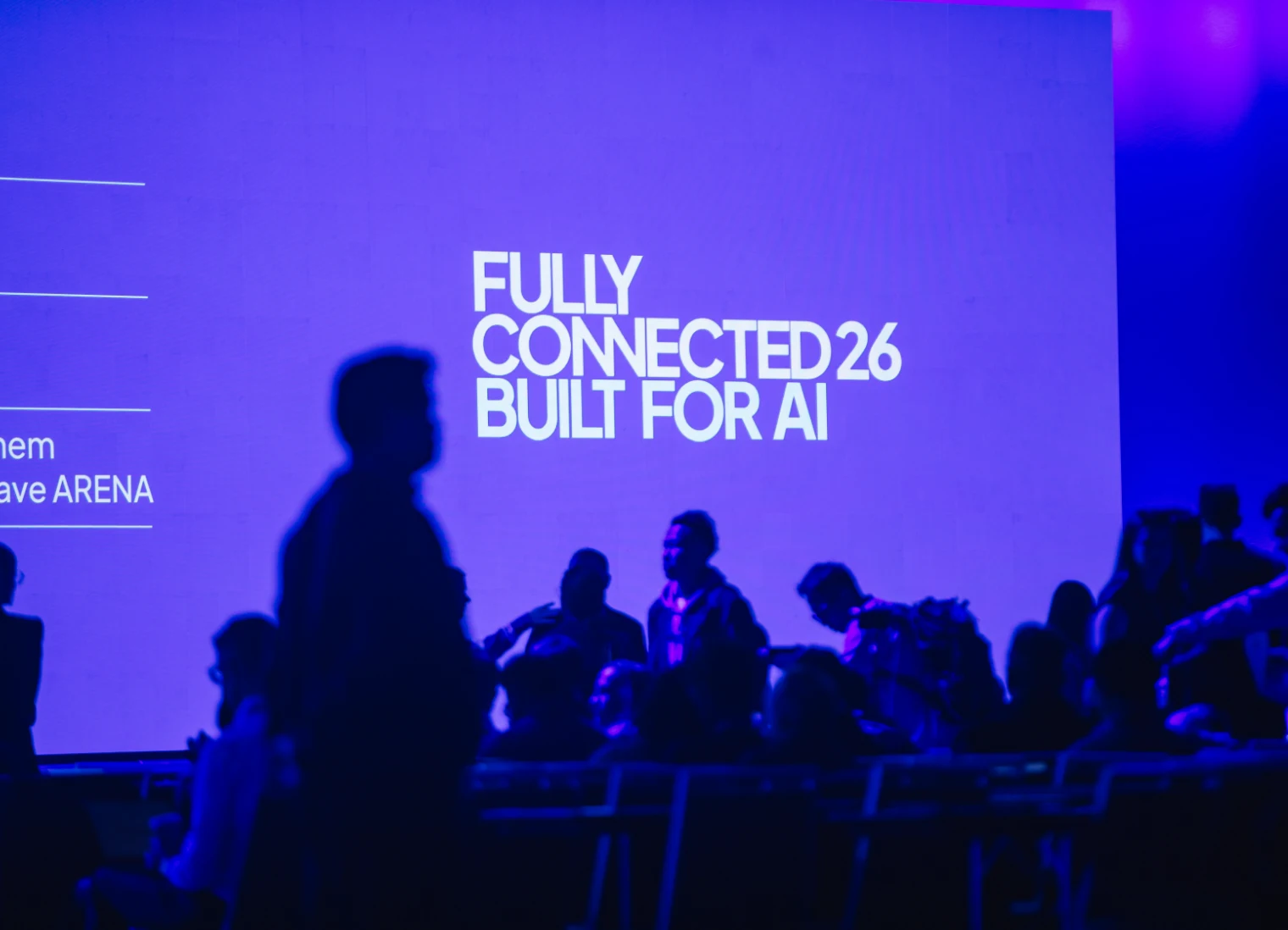
At NVIDIA GTC 2026, Jensen’s keynote—and the conversations that followed across the event—illuminated a broad shift in the industry toward reasoning, agents, and the infrastructure needed to run AI systems at scale. CoreWeave brought several launches, over a dozen demos, and countless real-world proof points that made that shift tangible—showing not just where AI is headed, but what teams need to build, run, and optimize AI systems in production.
What NVIDIA GTC 2026 made clear
The conversation is no longer just about model capability. It is increasingly about what it takes to run AI in the real world reliably, efficiently, and at scale. Across sessions, demos, and conversations throughout the week, the same questions kept surfacing: How do you move faster without losing control? How do you scale training and inference predictably? How do you improve agents over time without introducing more operational complexity?
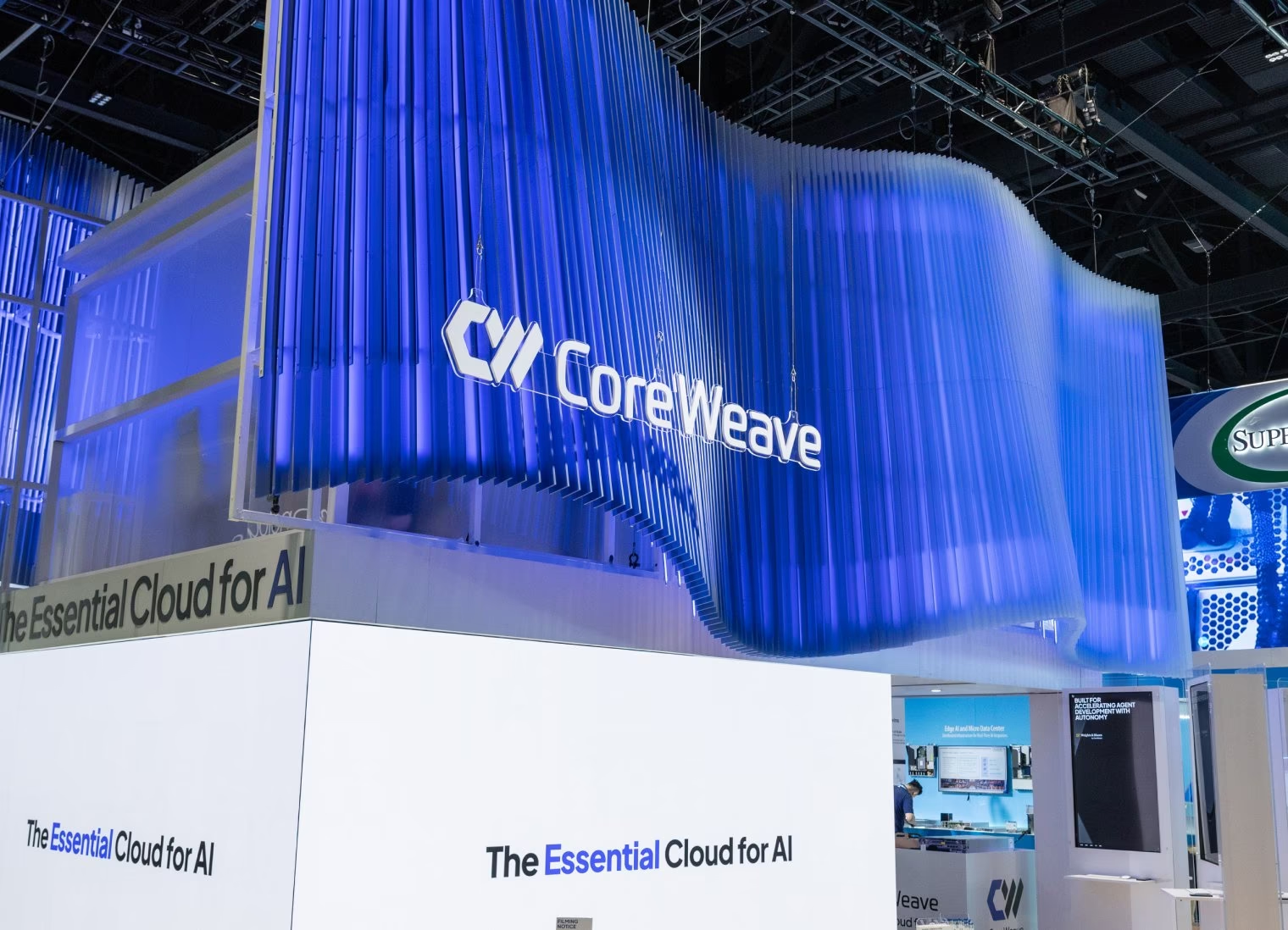
As an Elite Sponsor, CoreWeave showed up big on the expo floor and at the CoreWeave House, with presentation, discussions, and fireside chats all focused on what it looks like when cloud infrastructure is purpose-built for AI.
From major infrastructure moments like NVIDIA HGX B300 on CoreWeave to packed sessions and events, we showed what an AI cloud for teams moving from experimentation into production at global scale must deliver.
And based on the nonstop energy at the CoreWeave booth, from people engaging our demos and enjoying presentations to private meetings, there’s no question that the crowds at GTC were eager to learn more about The Essential Cloud for AI.
CoreWeave announcements—and the recent launches accelerating momentum
One of the biggest infrastructure moments was the general availability of NVIDIA HGX B300 on CoreWeave Cloud, which unlocks new levels of performance for large-scale reasoning and agentic AI workloads.
On the software side, Weights & Biases introduced new capabilities that make it easier to build, evaluate, and improve AI systems—including environment-free training in Serverless RL, production agent evaluations in W&B Weave, and the W&B Mobile App (iOS) for monitoring training runs in real time.
And while what we announced at GTC is only part of the story, the announcements certainly highlighted how quickly our platform is evolving to meet the demands teams face as they bring AI into production.
Alongside those announcements, we highlighted a series of recent launches designed to address those challenges:
- SUNK for production-grade training at multi-thousand GPU scale
- CoreWeave ARENA for validating real workloads before rollout
- CoreWeave Capacity Plans for more flexible consumption
- Dedicated Inference for controlled execution of custom models in production
Together, these launches point to the same priority: helping teams get AI into production faster, with more confidence regarding how systems will perform in the real world.
But what stood out at GTC wasn’t any single announcement. It was the meaningful discussions with builders and operators who are trying to build and run AI in production, and what those conversations revealed.
The patterns emerging across AI teams
Across conversations at the booth, in sessions, and at the CoreWeave House, several themes dominated.
First, teams are no longer talking about AI systems in terms of simple uptime or downtime. More often, they are dealing with degradation: training that slows unexpectedly, inference that becomes harder to predict, and agents that drift or fail in ways that are harder to diagnose than a traditional outage. This is exactly the challenge that CoreWeave’s Mission Control was designed for—as the industry’s first operating standard for running AI on CoreWeave Cloud, it delivers reliability, transparency, and actionable insights they need to keep things running at full speed.
Second, the bottleneck has shifted. For many teams, the challenge is no longer access to powerful models. It is what happens when those models have to run in real environments, across real infrastructure, with clear expectations around latency, cost, visibility, and reliability. Our recently launched CoreWeave ARENA offers a production-ready AI lab where our customers can assess assess real workload performance and cost on our purpose-built AI cloud before they commit to production
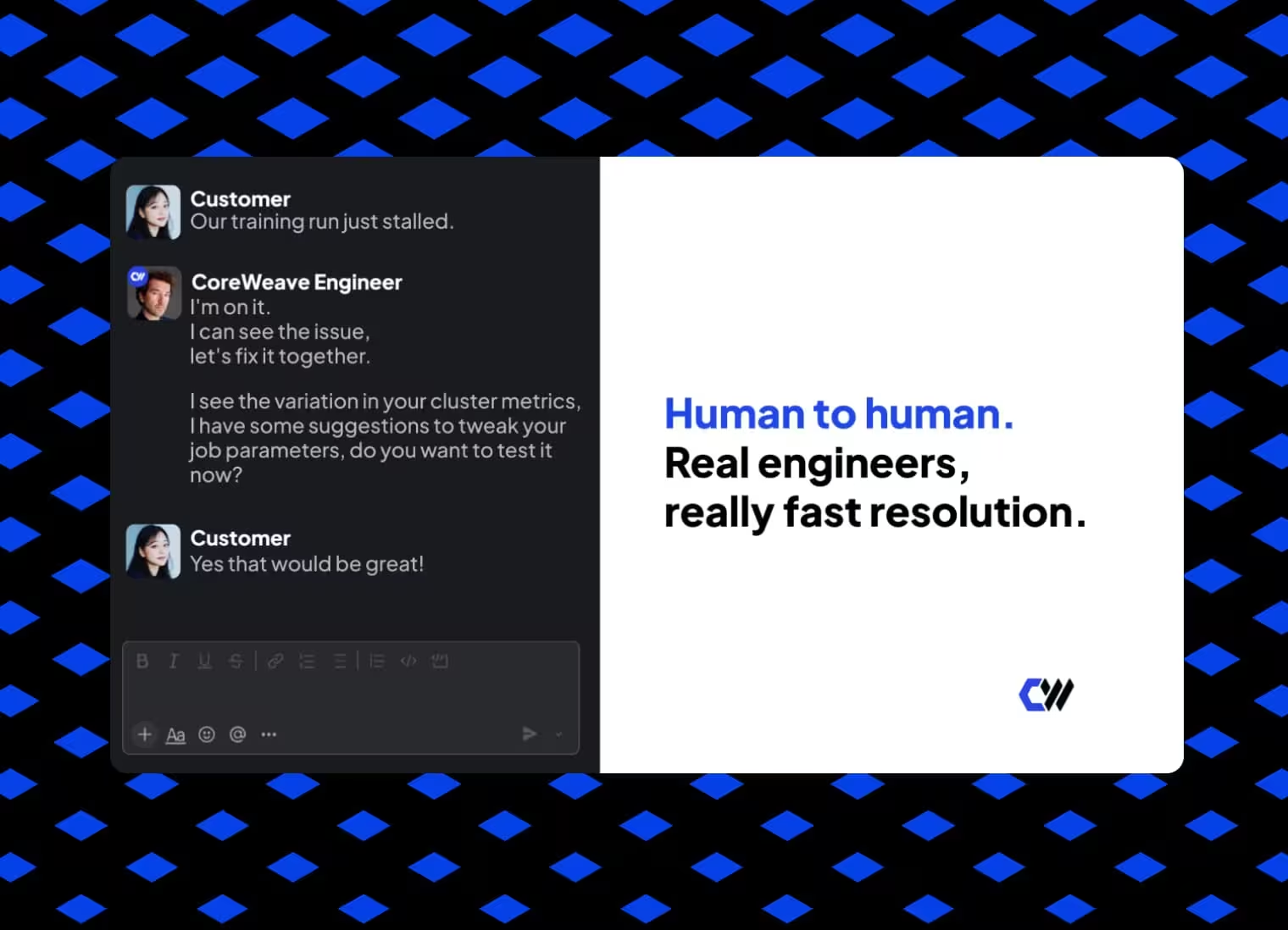
Third, speed is increasingly about iteration. The teams moving fastest are not just deploying quickly. They are shortening the distance between experiments, learning faster from failures, and improving systems continuously—whether that means faster onboarding, faster debugging, or more confidence before deployment. And that is what the CoreWeave Cloud was purpose-built for from the beginning.
And across all of it, one broader pattern became hard to ignore: AI is starting to behave less like a static pipeline and more like a loop with teams training, evaluating, refining, and re-running systems continuously.
That makes trust, control, and specialization more important than ever. Reproducibility, explainability, and operational visibility are no longer nice-to-haves. They are becoming part of the baseline.
New demands on AI systems
That shift changes what teams need from the infrastructure underneath the models and agents themselves. It is no longer enough to have raw performance in isolation. Teams need predictable execution, full-stack visibility, and infrastructure that supports continuous improvement in production.
To see how those requirements show up in practice, explore our full demo library from NVIDIA GTC 2026.
Our training and inference demos focused on what efficient, predictable execution looks like at scale. The emphasis was not just on raw performance, but on what performance enables: faster iteration, more stable production systems, and a clearer path from experimentation to deployment.
Our agent and reinforcement learning demos reflected another key shift. Teams are no longer just asking how to build agents—they are asking how to improve them over time, evaluate them in realistic conditions, and make them more reliable in production.
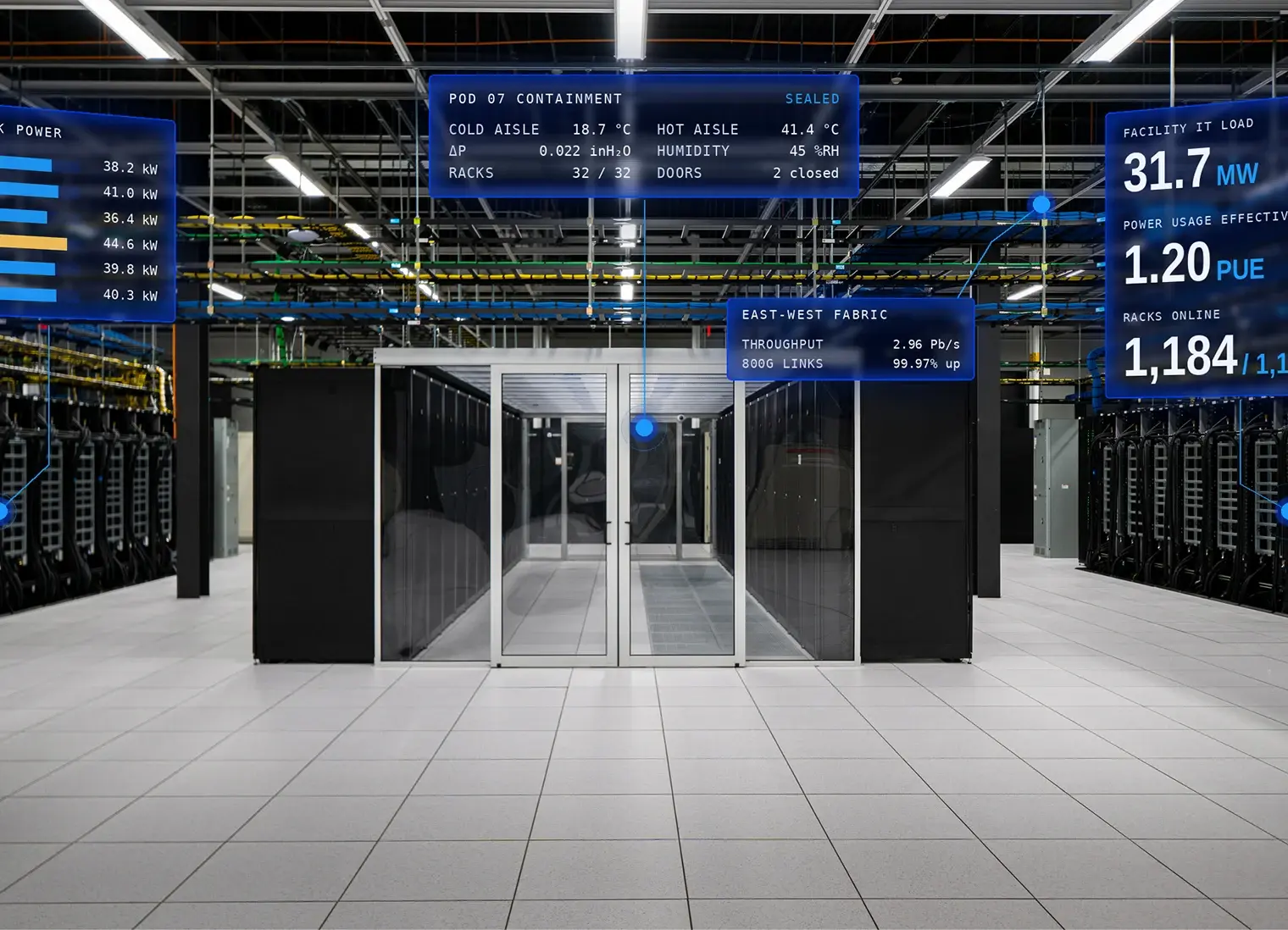
Mission Control added another layer by showing the value of full-stack visibility—from infrastructure to workloads to models and agents. For teams operating AI systems in production, observability is not just about troubleshooting. It is about understanding system behavior early enough to improve performance and operate with confidence.
And across domain-specific demos—including quant research and physical AI—we showed how quickly AI is becoming specialized.
The next phase is not one-size-fits-all AI. It’s about systems tuned to the demands of specific industries, real-world constraints, and demanding workloads.
Be Ready for Anything
In this new phase of AI, cloud strategy can’t be a background decision or afterthought. It fundamentally shapes how fast teams can iterate, how reliably they can run in production, and how much control they have as systems grow more complex.
The teams that move fastest will be the ones that treat their platform as a competitive advantage—not just a place to run workloads, but a foundation for continuous improvement.
That is the opportunity CoreWeave is focused on: helping teams move faster, operate with more confidence, and stay ready for anything.
Explore CoreWeave sessions and demos from NVIDIA GTC 2026.
Learn more about what makes CoreWeave The Essential Cloud for AI.
Discover what it takes to unlock agentic breakthroughs in our on-demand webinar.
Go deeper with our on-demand webinar, Decoding the Economics of AI Infrastructure.