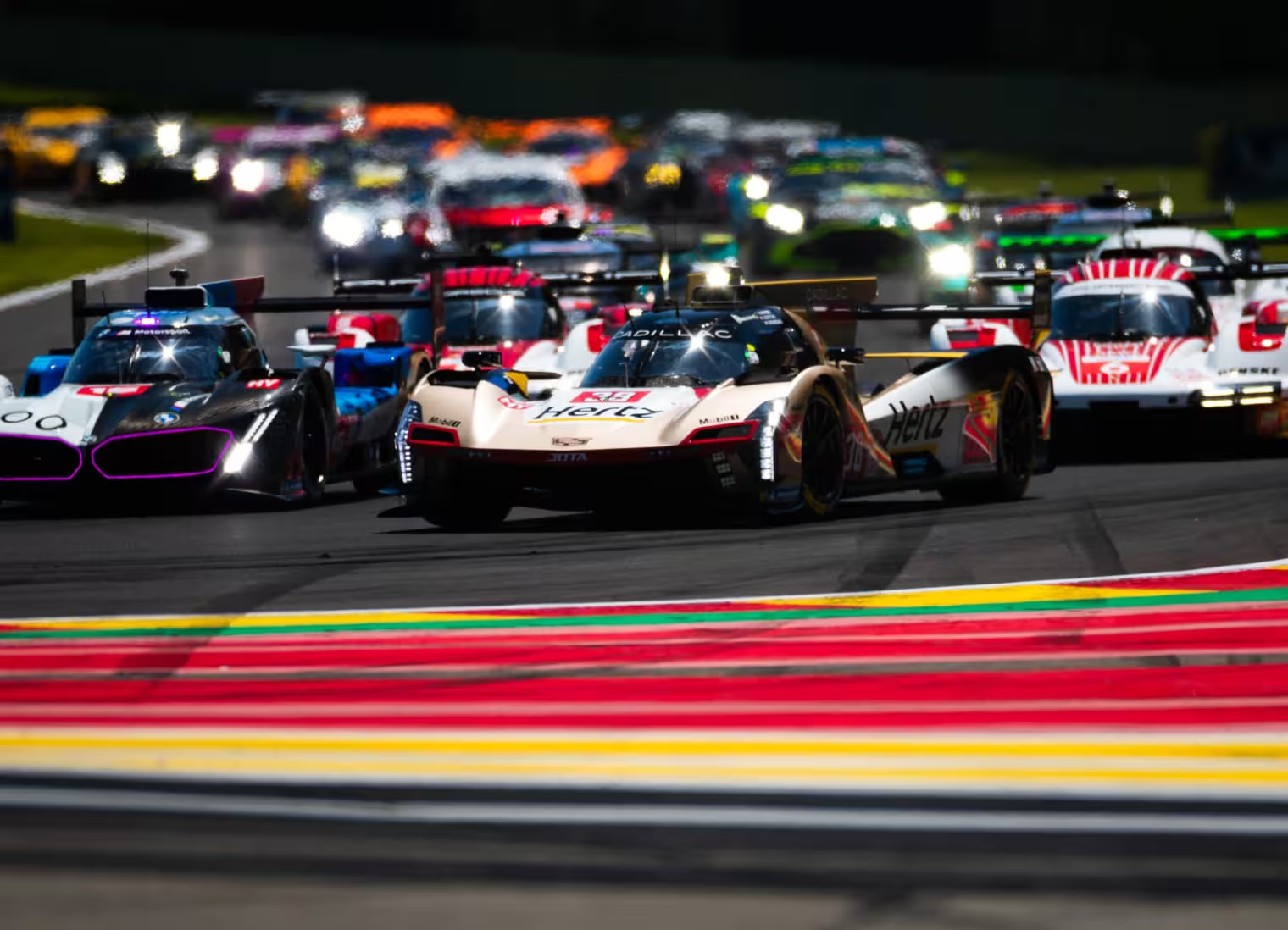
Some of the most practical applications of AI in motorsports begin before a car reaches the track. For the past few years, CoreWeave’s Physical AI Field Engineering team has built custom AI tools for JOTA's race-day workflows: first with Hertz Team JOTA, and since 2025 with Cadillac Hertz Team JOTA. Before a car reaches the track, teams like JOTA test its suspension setup on a seven-post rig, a machine that recreates almost any bump, curb strike, or cornering load the car will feel on track, without ever leaving the garage.
Each test on the rig costs time, and there's never enough of it. JOTA's engineers do what race engineers have always done: pick a setup, run it, read the result, and use judgment and experience to decide what to try next. But the possible setups run into the millions, and a program only has time for a few dozen runs. The real skill isn't finding the one right setup, it's deciding which test will teach you the most.
Why rig time runs out before the setups do
Motorsports engineers constantly weigh hundreds of parameters against each other: dampers, springs, anti-roll bars, ride height, aero balance, all pulling in different directions at once. Change one and it changes how the rest behave. The rig can test almost any setup you throw at it. What it doesn't do is tell you which one to try next.
That's why race engineering runs on learning fast, not just testing a lot. Time is the one thing nobody has enough of, whether it's the rig back in the garage or the handful of configurations you can try once the car is at the track. JOTA had already worked through 65 configurations, with a signal already forming in the data about where performance was heading, one that isn't easy to pull out fast enough to act on mid-program.
Each run on the rig takes about seven minutes, leaving engineers little time to decide what to test next. Seven minutes is not enough time for anyone to sit with a high-dimensional dataset and reason out the next move from scatter plots and heat maps by hand.
It's a gap teams describe all the time: they know there should be a faster way to learn from the data they've already generated, a way to shortcut toward the tests that maximize information gain instead of sweeping their way there. They just never have the time mid-program to stop and build it.
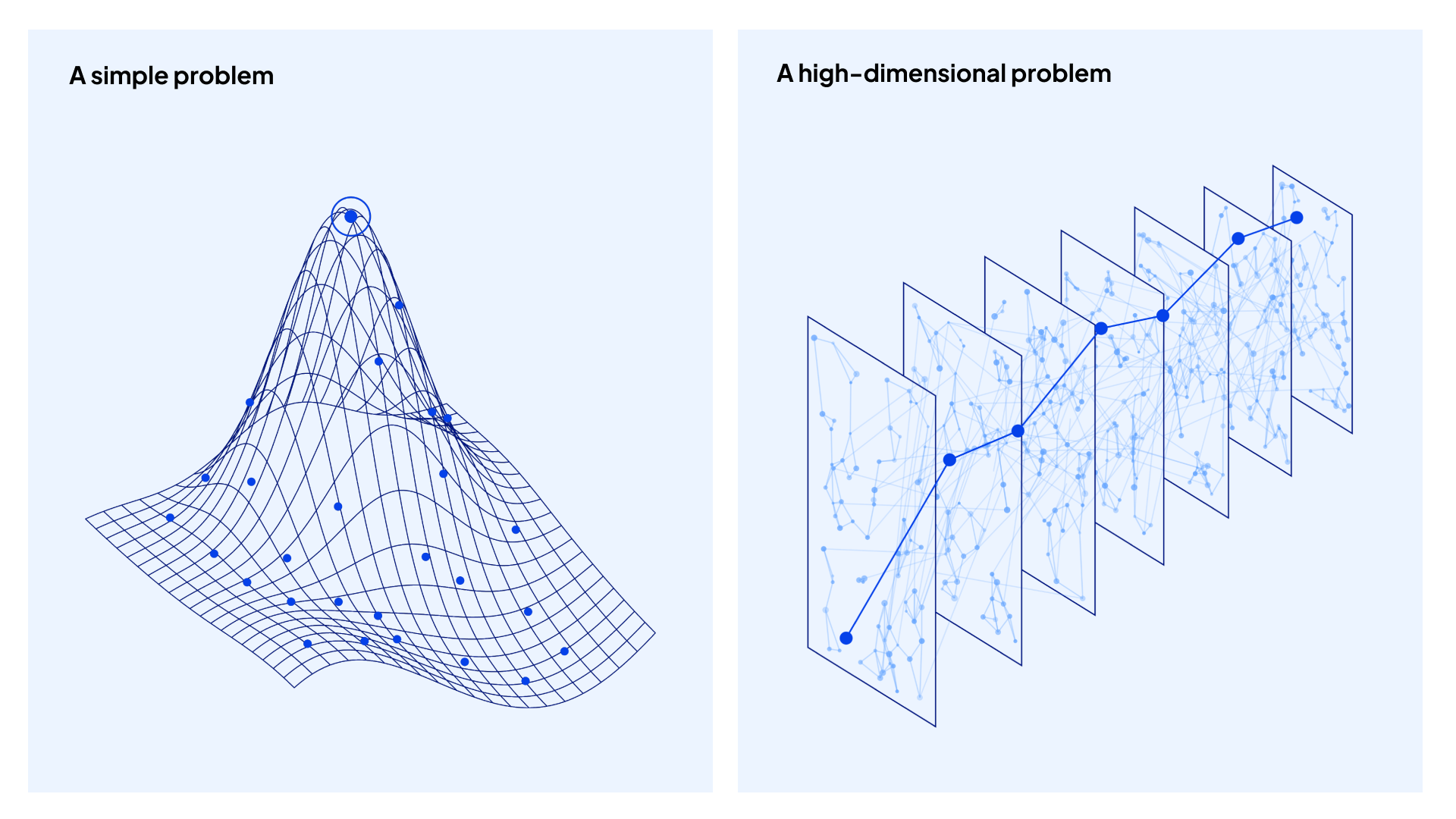
Partway through one recent program, JOTA's engineers started using something new: a setup-recommendation tool built by CoreWeave's Physical AI Field Engineering team, drawing on years of motorsport engineering expertise that came into CoreWeave through its acquisition of Monolith. The tool reads the results JOTA has already gathered and points to setups worth trying next, based on where the data suggests there's the most left to learn. JOTA's engineers still choose and approve every configuration that goes on the rig. What changes is how much they learn from the runs they have left.
Building AI tools that motorsports engineers will use
This worked because the team understood motorsports as well as AI. CoreWeave's Physical AI Field Engineering team comes from motorsport, automotive, and industrial engineering backgrounds, not computer science. We didn't show up with something pre-built. We defined the problem and built the deployment together, on-site, inside the same tight program timeline that JOTA never had spare time to build it in themselves.
The reason this collaboration works is that we're experimenting together, not just being handed a tool. CoreWeave understands engineering as well as the AI, so it never feels like we're explaining our sport to them. We just keep finding new things to build.
Tomoki Takahashi, Technical Director, JOTA Group
Background matters more than it sounds like it should. A generalist data science team has to learn a domain's physics from scratch before its models can be trusted, and that learning happens on the customer's time. We start from the other side: many of our team have sat in a similar seat to JOTA's engineers, so we frame a problem in the language they already use, dampers, Belleville stacks, bump and rebound, center of pressure, rather than asking them to translate their car into machine learning terms first.
It also means we don't show up empty-handed. We bring tools and methods already refined across years of similar problems, backed by the stack that's come into CoreWeave through acquisitions like Monolith, Weights & Biases, and marimo, all running on CoreWeave Cloud. Few teams have that combination of stack and motorsport background under one roof.
Co-building a way to see which car setup might win
JOTA faces the same question every race engineer runs into eventually: is the next setup actually better, or does it just look better in isolation? We worked through it together, drawing on past programs and tools our team had already built, aimed at getting the most learning out of every run left on the rig.
That took shape as a test-recommendation tool, pointed at JOTA's rig data and built on methods our team has refined across hundreds of engineering programs. It fits a model of how the car's performance responds to changes in setup, not a physics simulation, but a relationship learned directly from the data. Just as importantly, it learns where it's uncertain: confident where JOTA had tested densely, honest about the gaps where the data was thin, which is exactly the visibility JOTA's engineers didn't have working from scatter plots alone.
The tool uses active learning: as it receives more test results, it gets better at identifying which untried setups could reveal the most about the car’s performance. Since this was a single-pass program, we leaned it toward the setups it was already fairly confident would perform well, while still weighing the regions it wasn't sure about and adding a bit of controlled randomness, so it kept learning instead of settling too early.
The score behind it, a multi-objective performance index, was jointly defined with JOTA's engineers, in their terms, since the car is judged on more than one thing at once. Setups were ranked along a Pareto front rather than a single number, so JOTA could shift priorities after the fact instead of re-running the program. Every configuration that touched the rig was JOTA's call. The tool surfaced where to look. Their engineers decided where to go.
Seeing the tool point to the tests worth running
This is the problem JOTA raised in the first place: with this many variables interacting, how do you know if the test you're about to run is actually worth the seven minutes it costs? The chart below is one answer.
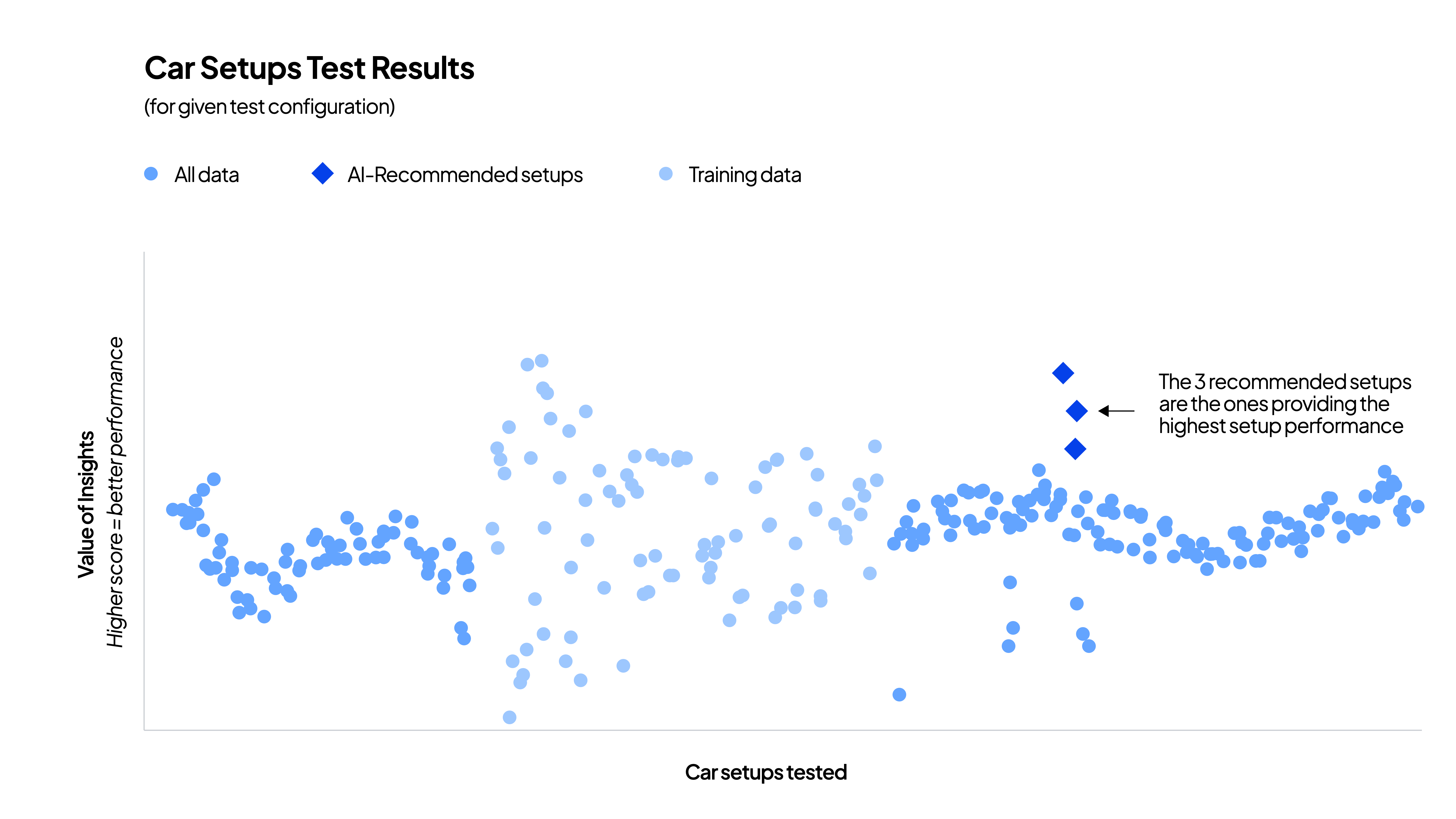
The tool isn't picking these because it has found the best answer. Running on active learning, it recommends the points most likely to tell JOTA something new, either where performance was heading, or where it still had the least confidence and needed a data point to learn from. Some landed toward the stronger end of the results, which is what you'd expect from a tool steering testing toward the parts of a search space still worth exploring, out of far more combinations than anyone could test by hand, not proof it converged on an optimum.
This came from a single pass on data the tool hadn't seen before: a strong early result, not a claim that the space is fully mapped or that every program looks the same.
Further exploration: trackside AI
The same team has built on this partnership beyond the test rig. Working with JOTA's engineers, we're developing a trackside application focused on damping, one that recommends adjustments during on-track running. An engineer can run a proposed damping setup against the model and get a recommendation on what to adjust in seconds, with mathematically grounded reasoning. It's currently being tested trackside, extending the same idea from the rig to the track.

Building smarter with AI
Modern rig facilities are capable of far more than most test plans ask of them. The bottleneck is rarely what the rig can do, it's how well the plan uses that capability. When the test budget is finite, how you spend it is everything, but teams are usually too busy catching up on the current campaign to step back and build a smarter way to test.
Sometimes we know AI could solve a problem for us, we just don't know how to get there. That's exactly what working with the team gives us, help figuring out the approach, and help getting it into use.
Tomoki Takahashi, Technical Director, JOTA Group
That's the gap CoreWeave's Physical AI Field Engineering team works in. Not by replacing the rig, the engineers, or the structured method that makes rig data trustworthy, but by turning that data into recommendations before the next session begins, arriving at each test with better questions than the one before. And the value compounds: each pass tightens the model and sharpens the recommendations, so a team that runs this across several programs builds a picture of its own car that a competitor running conventional sweeps can't match at the same budget.
Teams that build this into their workflow test less and learn more. If you're solving a similar problem and want a partner who understands your domain as well as the AI, get in touch.
Read more about CoreWeave Physical AI Field Engineering